Color Mania Quiz guess logos
Unico GamesTrivia
4.219.82K Reviews
- Version
- 3.1.0
- Installs
- 5.00M
- Age Rating
- Everyone
Screenshots
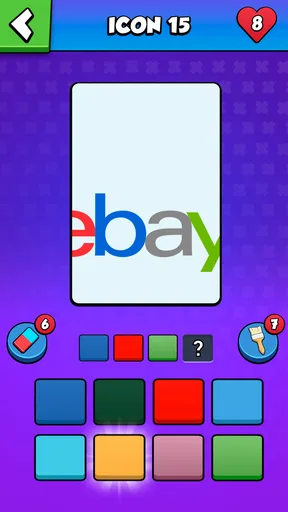
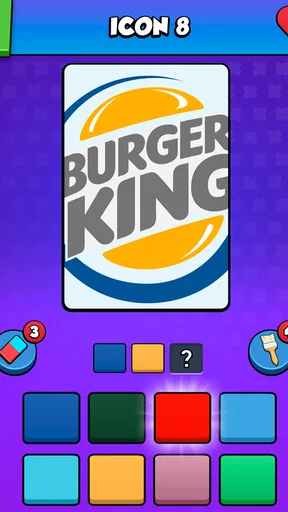
Our Review of Color Mania Quiz guess logos
 Analysis by Appyee
I enjoy trivia games that are easy to understand within seconds but still give me a reason to keep trying, and Color Mania Quiz fits that mood well. It is a free logo-guessing game from Unico Games, built around visual recognition rather than long questions or complicated rules. The basic challenge is simple: look at a logo, identify the brand, and move on to the next puzzle. That simplicity makes it comfortable for a short break, but the growing difficulty can turn a few spare minutes into a surprisingly competitive session.
What makes it worth considering is the mix of casual play and personal knowledge. You do not need a tutorial-heavy experience, a powerful phone, or a large block of free time. At the same time, it is not merely a collection of obvious symbols. Some logos are immediately familiar, while others test memory, attention to small details, and your ability to recognize a brand after visual information has been reduced. I found that balance more appealing than trivia games that rely almost entirely on obscure facts.
How the current game feels to play
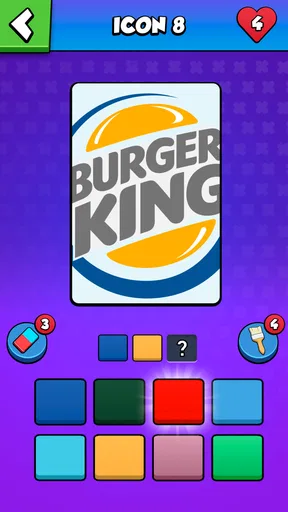
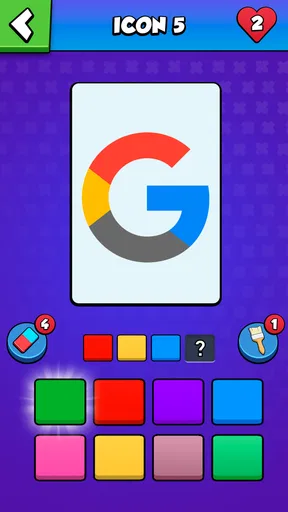
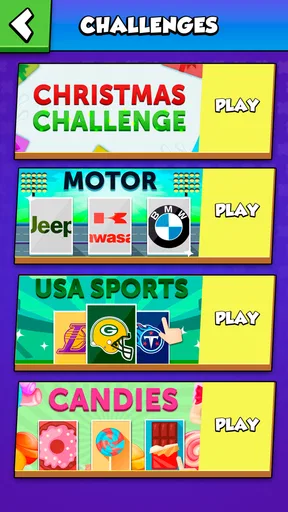
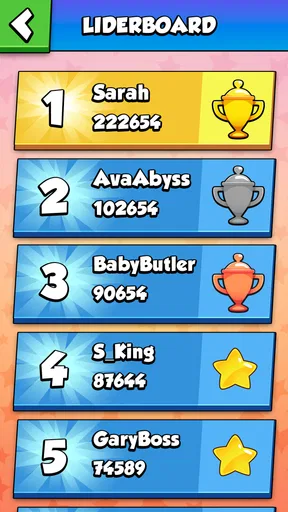
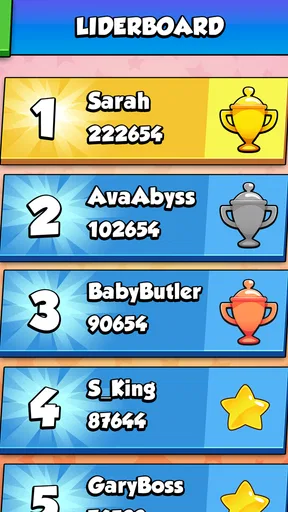
The central loop is direct: a logo appears, and I try to identify it before using help or making a guess. That keeps the focus on recognition instead of menus or elaborate mechanics. The store summary describes hundreds of logo quiz games and leaderboard progression, so the experience is designed to work both as a relaxed solo challenge and as a longer attempt to improve your standing.
The strongest part of this format is its accessibility. A logo can trigger an answer faster than a written question, which means the game is suitable for players who prefer visual puzzles. It also works well when I am waiting for an appointment or taking a short break. I can play a few rounds without needing to remember a complicated story, manage a character, or reconnect with a previous session.
That convenience has a trade-off. Logo recognition is personal. A player who regularly sees international brands may find some rounds much easier than someone whose everyday shopping and media habits are more local. The game can therefore feel uneven: one puzzle may be instant, while the next may seem unfairly unfamiliar. I see that as an important part of deciding whether this type of trivia is right for you.
The game is marked for Everyone, which matches the approachable presentation and straightforward subject matter. Families can use it as a light guessing activity, although I would still expect different age groups to have very different strengths. Younger players may recognize logos from entertainment or technology, while older players may have an advantage with established companies and traditional brands.
A useful way to play instead of guessing randomly
My best results came from treating each logo as a visual clue rather than immediately typing the first brand that came to mind. I look at the shape, color arrangement, lettering style, and any partial symbol. When a logo is covered or simplified, the surrounding design can be more useful than the visible letters. This method is especially helpful on puzzles that seem familiar but do not produce an instant answer.
Another practical habit is to separate confidence from certainty. If I recognize the industry but not the exact company, I consider whether the visible colors or icon match the brand I am thinking of. That reduces careless guesses and makes the harder rounds feel like actual reasoning rather than a memory lottery. It also gives the game more replay value because I start noticing design patterns that I ignored during my first attempts.
I would not recommend spending every round on a stubborn answer immediately. If the game offers assistance during a difficult puzzle, saving it for a logo that is genuinely outside your experience is more sensible than using help on something you might solve after another look. This is a small strategy, but it changes the pace of a session and helps keep the challenge enjoyable.
Why the leaderboard matters, and when it does not
The leaderboard angle gives the game a reason to continue after the novelty of the first puzzles wears off. I like having a visible target, especially when I know I missed answers because of rushed guesses rather than lack of knowledge. Trying to improve accuracy can make familiar rounds feel worthwhile instead of disposable.
However, competitive ranking is not equally motivating for everyone. If you prefer trivia as a calm, private activity, the leaderboard may feel like background decoration. It does not replace a deeper progression system for players who want character upgrades, stories, timed events, or a sense of exploration. Compared with a broad trivia app that rotates through science, history, sport, and entertainment, this game is narrower by design.
That narrow focus is also its identity. I would choose it over a general quiz when I want a visual challenge that starts quickly. I would choose a conventional question-and-answer trivia game when I want to learn facts, compare knowledge across subjects, or avoid brand familiarity influencing the result. Neither format is automatically better; they satisfy different kinds of curiosity.
What the version and history suggest
Color Mania Quiz was released on August 15, 2013, and the current version is 3.1.0. That history matters because this is not a newly launched experiment trying to prove that logo quizzes can work. It has had time to establish its basic format, and its continued presence suggests that the simple recognition loop remains useful to a substantial audience.
The current version should be viewed as an established iteration rather than a promise of a completely different game. I would not install it expecting a modern role-playing layer or a major change in the way logo puzzles are solved. Its appeal comes from the familiar structure: identify the image, manage your confidence, and keep progressing through the quiz.
For existing users, an updated version is most valuable when it preserves the quick-start nature of the game. A logo quiz can become frustrating if navigation gets in the way of the answer, so a stable and uncomplicated flow is more important here than flashy presentation. New players benefit from the same quality because they can understand the purpose of the app without studying instructions.
The scale of its audience is notable. The game has more than five million installs, with an average rating of 4.2 from around one hundred sixty thousand ratings and about twenty thousand written reviews. Those figures do not guarantee that every player will enjoy the same logo selection, but they do indicate that the format has reached far beyond a small niche.
That audience size also helps explain why I would approach it as a casual evergreen game. It is not something I need to master before it becomes enjoyable. I can open it, solve a few puzzles, stop, and return later without losing the basic context. For people who prefer games that respect short sessions, that is a meaningful strength.
What existing users should expect from the current state
If you have played an earlier version, the safest expectation is continuity around the logo-quiz concept. The current release remains centered on recognizing brands and progressing through the available challenges. I would judge it by the quality and variety of its puzzles, how naturally the assistance fits into play, and whether the competitive layer gives me a reason to return.
Players returning after a long break may also notice that their own knowledge has changed more than the game has. Brands become familiar through work, shopping, streaming, travel, and social media, so a puzzle that once seemed impossible can later become obvious. That makes revisiting missed rounds useful: the game can act as a small record of how visual familiarity develops over time.
There is a practical consideration for older devices as well. The minimum operating system is Android 6.0, so compatibility is relatively broad for Android users with older phones. I still would not assume that every device will feel identical, particularly if the screen is small or the display makes color differences difficult to distinguish. In a logo game, those details affect solving more than they would in a text-only quiz.
The game is free to download, while in-app purchases range from $1.99 to $49.99 per item. That makes it possible to try the core experience without paying first, but I would keep the purchase structure in mind before handing the phone to a child or treating help items as part of normal play. My advice is to begin without spending and decide only after you understand how often you actually need assistance.
Where the experience still has limits
The biggest limitation is the dependence on brand knowledge. A player can be observant, logical, and good at trivia yet still struggle simply because a particular logo is not part of their daily life. This is different from a factual question, where reasoning or general education may offer a path forward. Here, sometimes the missing ingredient is exposure.
The format can also become repetitive for players who want constant variety. The visual task changes from logo to logo, but the action remains fundamentally the same. I find that satisfying in short bursts, while longer sessions can start to feel like a sequence of similar recognition tests. A broader trivia game is likely the better choice if you need different question types to stay engaged.
Another gap is the limited learning payoff. Solving a logo may teach me the name of a brand I did not know, but the game is primarily about identifying it, not explaining its history, industry, or cultural context. If your goal is structured learning, a quiz app with detailed answers will offer more substance after each question.
There is also a difference between challenge and obscurity. A good puzzle gives me enough visual information to reason toward an answer. A less satisfying one feels difficult only because the brand is unfamiliar. When that happens, I do not blame my general trivia ability; I simply recognize that the game is testing exposure to logos. That distinction helps prevent frustration and keeps expectations realistic.
Who should install it, and who should skip it
I recommend it to players who enjoy visual puzzles, brand spotting, and short sessions with a clear objective. It is particularly suitable for casual competition between friends or family members, because people can compare recognition skills without needing to agree on a broad trivia subject. It also suits anyone who likes improving through repetition: after seeing a logo once, you are more likely to recognize its structure the next time.
A realistic everyday use case is a shared phone during a quiet coffee break. One person reads the puzzle, another suggests a brand, and both discuss why the colors or symbol look familiar. The game works well in that situation because the rules are easy to explain and a round does not require a long uninterrupted commitment. It can also fill the small gaps between errands without demanding the attention that a more complex game needs.
I would skip it if you dislike advertising-style brand content, feel that logo familiarity is too dependent on culture, or want trivia that expands your knowledge with explanations. I would also look elsewhere if your priority is an elaborate progression system, multiplayer interaction, or a wide range of subjects. This is a focused logo quiz, and its focus is both the reason to try it and the reason some players will lose interest.
What I would watch during continued use
For long-term enjoyment, I would pay attention to whether the puzzle collection continues to feel varied rather than simply large. Hundreds of rounds can sound substantial, but variety depends on how distinct the logos are and whether the difficulty rises in a satisfying way. I would also watch how often I encounter puzzles that reward careful observation versus puzzles that depend almost entirely on prior exposure.
I would keep an eye on the balance between free play and optional purchases too. Since the game is free and individual in-app items can cost from $1.99 to $49.99, the important question for me is whether normal progress remains comfortable without buying help. A purchase can be reasonable when it removes a genuine obstacle I have chosen to overcome, but it should not become the only practical way to maintain momentum.
My overall view is positive, with clear boundaries. Color Mania Quiz delivers a clean, approachable form of logo trivia that is easy to start and surprisingly good at exposing gaps in visual memory. Its 4.2 average rating and large install base fit the experience I had: it is a proven casual game, not a deep educational platform. I would recommend trying the free version if you enjoy recognition challenges, while keeping expectations modest about variety, learning depth, and the influence of brand familiarity.
In the end, I see it as a dependable pocket game rather than something I would play for hours every day. Its best moments come when a difficult logo suddenly becomes recognizable after I examine the shape and color carefully. That small feeling of discovery is enough to bring me back for another round, especially when I want a quick challenge with no complicated setup. Its focused simplicity is its real strength, provided you are comfortable with a quiz built around brands rather than general knowledge.
Verdict
Strengths of Color Mania Quiz guess logos
- Simple gameplay that is easy to understand from the first round.
- Short quiz sessions are convenient for quick breaks.
- Recognizing logos can improve visual memory and brand recall.
- Progressive challenges help keep the quiz engaging over time.
- Suitable for casual players who prefer relaxed, non-action games.
Limitations of Color Mania Quiz guess logos
- Some logos may be difficult without regional brand knowledge.
- Repeated questions can reduce the challenge after extended play.
- Hints or extra attempts may be limited during harder levels.
- The game may feel repetitive for players seeking varied gameplay.
- Brand familiarity can strongly affect results more than general knowledge.
Similar Picks in This Category
View All
Millionaire 2026 Quiz & Trivia
Quiz & Trivia Games by Submarine Apps4.5

Brain Test 2: Tricky Stories
Unico Studio4.7

Trivia Crack: Brain Quiz Games
etermax4.4

QuizzLand. Quiz & Trivia game
Quiz & Trivia Games by Mno Go Apps4.8

Brain Test: Tricky Puzzles
Unico Studio4.7

Logo Quiz
bubble quiz games4.5
Frequently Asked Questions
What is Color Mania Quiz: Guess Logos?
Color Mania Quiz: Guess Logos is a casual trivia game that challenges you to identify famous brands from colorful logo images. Each level presents a logo that may be complete, partially hidden, blurred, or stylized, and you must select or spell the correct brand name. It is designed for quick sessions and combines visual memory, general knowledge, and simple puzzle-solving mechanics.
How does the gameplay work?
The game displays a logo and asks you to guess the company or brand represented by it. Depending on the level, you may receive multiple-choice answers, letter tiles, or a partially revealed image. Correct answers usually unlock new challenges, while hints can help when a logo is difficult to recognize. The difficulty generally increases as you progress through the available categories.
Is Color Mania Quiz: Guess Logos free to download and play?
The game is generally available as a free download, allowing players to access its core logo-guessing challenges without paying upfront. However, free versions may include advertising, optional hint purchases, or other in-app purchases. Before downloading, check the current Google Play Store or App Store listing for pricing, available purchase options, and whether certain features or content require payment.
Does the game require an internet connection?
Some parts of Color Mania Quiz: Guess Logos may work offline after installation, particularly the basic quiz levels and locally stored content. Nevertheless, an internet connection may be needed to load advertisements, synchronize progress, download updates, access online features, or complete optional purchases. Offline behavior can differ between Android and iOS versions, so testing the game without Wi-Fi is recommended if offline play is important to you.
Is Color Mania Quiz: Guess Logos suitable for children?
The game is generally easy to understand and can be suitable for children who enjoy brand-recognition quizzes, although the recommended age should be confirmed on the store page. Some logos may be unfamiliar, and advertisements or optional purchases can affect the experience. Parents should review the app’s content rating, privacy information, advertising settings, and device purchase controls before allowing younger children to play independently.
Play our best games!


